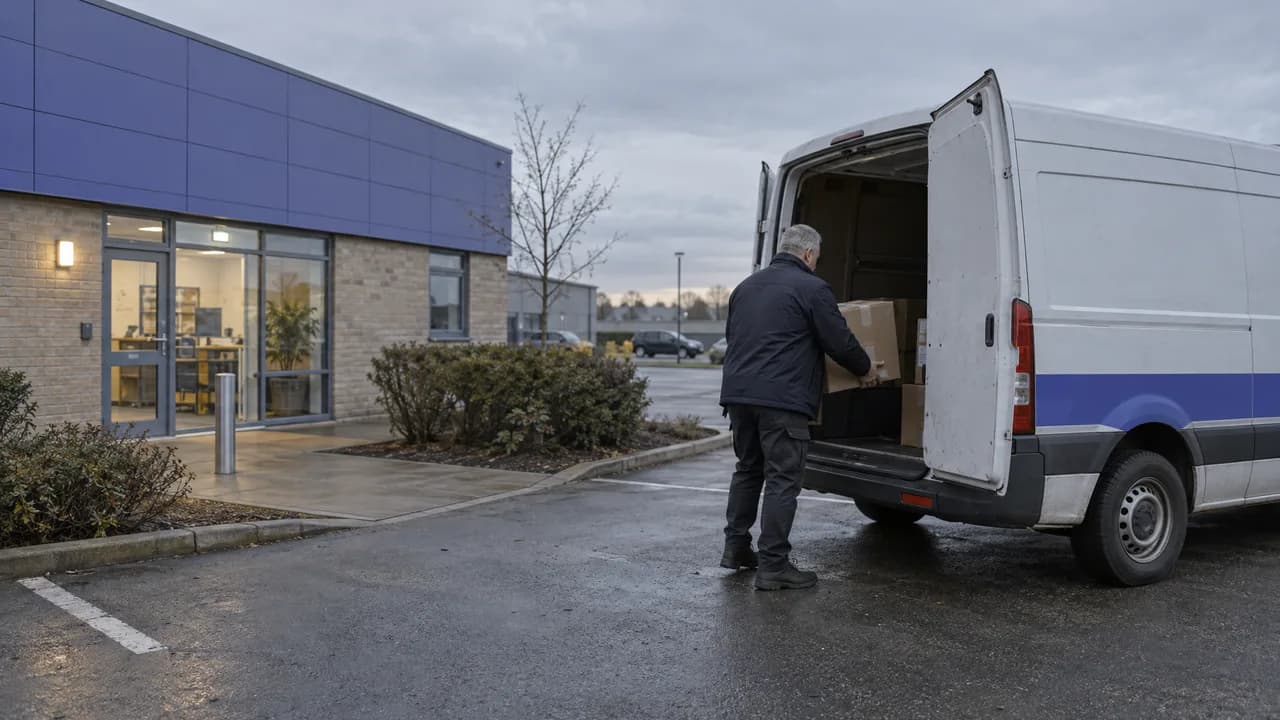
How to Choose a Town Courier San Francisco Businesses Can Depend On
Running a structured pilot exposes operational gaps early. A carrier that handles a quiet Tuesday morning well may struggle when Friday afternoon order volume doubles.
By the EtaFlex Logistics team
5 min read
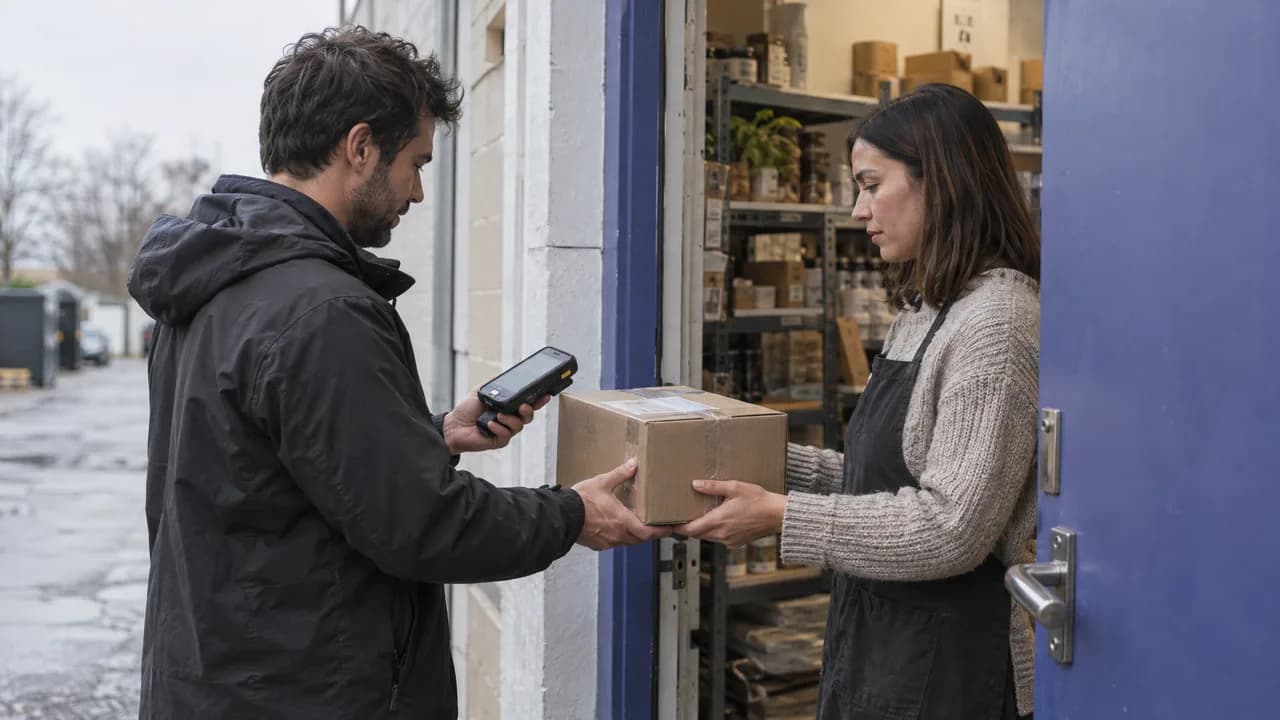
Businesses in San Francisco need a local courier partner built around real-time tracking, insured deliveries, and AI-optimized routing rather than defaulting to the cheapest or most generic option. Picking a delivery vendor by base rate alone hides the real operational cost of missed windows, stalled tracking updates, and manual dispatch coordination. A clear look at how local courier models actually run helps operations teams match their shipment volume to the right infrastructure.
Four Local Courier Models and What Separates Them
The Bureau of Labor Statistics classifies the couriers and messengers subsector (NAICS 492) as establishments that provide intercity and/or local delivery of parcels and documents, including express delivery services, without operating under a universal service obligation. Because private couriers do not follow a single federal mandate, service quality varies sharply across four distinct operating models.
On-demand point-to-point couriers handle urgent, single-stop runs dispatched immediately after booking. Look for live GPS visibility and clear pickup confirmation so your team never wonders why a courier tracking number is not updating between dock handoff and arrival.
Recurring route couriers run fixed daily or weekly pickups for offices, warehouses, and retail locations. Check whether the provider offers dedicated scheduled delivery services that lock in pickup windows without requiring manual rebooking every morning.
Multi-stop B2B last-mile fleets consolidate dozens of commercial drop-offs into sequenced routes. Verify that the carrier uses dynamic route optimization rather than static spreadsheets, which break down the moment a receiving dock closes early or traffic backs up.
National parcel networks move high-volume boxes through regional sorting hubs on standardized next-day or ground timelines. These networks suit low-urgency residential parcels, but hub transfers add handling touchpoints and remove direct driver communication when a local business needs a package across town by noon.
Evaluating a local carrier against these four categories prevents a common mismatch: forcing urgent B2B freight into a hub-and-spoke parcel workflow that was never built for same-day local control.
How to Select and Roll Out a Local Delivery Partner
Audit your past ninety days of local shipments by urgency, package dimensions, and delivery window to separate recurring runs from urgent requests.
Map the software tools your warehouse or storefront already uses so you know whether you need direct API connections or a web booking portal.
Request written confirmation of package insurance coverage and real-time tracking standards before comparing quotes across providers.
Test the carrier's last mile delivery options with a low-risk pilot route during peak afternoon traffic to measure actual pickup and drop-off accuracy.
Establish a standard operating procedure for your receiving and shipping staff, covering label placement, dock access instructions, and exception escalation.
Review delivery timestamps and driver handoff records after the first two weeks, then lock in recurring schedules for predictable volume while keeping on-demand capacity ready for last-minute business orders.
Running a structured pilot exposes operational gaps early. A carrier that handles a quiet Tuesday morning well may struggle when Friday afternoon order volume doubles.
How Dispatch, Routing, and Proof of Delivery Work Under the Hood
Point-to-point on-demand services rely on direct dispatch. When an order enters the system, a dispatcher or automated queue assigns the nearest available driver, who drives straight from pickup to drop-off. No sorting facility touches the cargo, which cuts transit time and reduces damage risk, though the per-stop cost stays higher than consolidated routes.
Multi-stop B2B fleets operate on route optimization engines. Instead of assigning drivers by zip code alone, software ingests order addresses, delivery time windows, vehicle capacity, and live traffic data to calculate the fastest stop sequence. When a new order drops in mid-shift or road conditions change, the engine recalculates the sequence and pushes updated turn-by-turn directions to the driver's mobile device.
Hub-and-spoke parcel carriers work differently. Drivers collect packages throughout the day and bring them to a central sortation facility. Automated belts scan barcodes and route boxes onto overnight linehaul trucks or morning delivery vans. Because tracking only updates at fixed facility scans, shipments can sit in a black box for hours until the next hub scan registers.
Proof of delivery separates dependable commercial carriers from informal alternatives. A modern local workflow captures GPS coordinates, timestamps, and digital confirmation at the exact moment of handoff. Choosing the most reliable local courier means confirming that proof of delivery flows straight back into your order system, eliminating manual phone calls to verify whether a client received their shipment.
How Eta Flex Supports San Francisco Delivery Operations
We built Eta Flex for businesses that need dependable local execution without managing an internal fleet. We combine B2B courier and last-mile delivery with RoutesNOW AI route optimization software. Our AI-powered route optimization engine uses real-time data, traffic patterns, and predictive analytics. We provide smart API integrations with eCommerce, ERP, and warehouse systems, along with GPS tracking for driver services.
Every order includes real-time tracking and full package insurance coverage. We support same-day and on-demand delivery, recurring logistics scheduling, multi-stop route optimization, and on-demand driver services with vetted drivers. Our nationwide network includes 4,000+ vetted drivers and 8+ years of experience.
Pricing is quote-based. If you need a flat, self-serve consumer rate chart for occasional personal mail, a commercial B2B quote workflow may feel heavier than necessary. For businesses moving time-sensitive inventory or recurring local orders, however, custom quoting aligns vehicle capacity and routing directly with your daily schedule.
Reach out through our contact page if you have operational questions, or request a custom delivery quote to map out your Gaithersburg routes and lock in dependable local coverage.
Frequently Asked Questions
Is San Francisco, CA a wealthy area?
San Francisco sits inside San Francisco County, a commercial and residential corridor known for technology firms, federal contractors, and established suburban neighborhoods. From a logistics standpoint, that mix creates dense B2B delivery demand alongside high expectations for punctual, professional handoffs. Businesses operating in the area benefit from carriers that treat commercial deliveries with strict time-window discipline and full package insurance coverage rather than casual drop-offs.
How can I travel from San Francisco CA. to Los Angeles, CA?
Drivers typically travel northwest from San Francisco CA to Los Angelees via I-270 or Maryland Route 355, while rail commuters use the San Francisco Red Line to Shady Grove or the MARC Brunswick Line. For commercial freight moving along the I-270 corridor, rush-hour congestion can shift transit times unpredictably. Dynamic route optimization that adapts to live traffic patterns keeps same-day deliveries on schedule when highway bottlenecks form.
What are the crime statistics in San Francisco, CA?
Local crime conditions vary across residential, retail, and industrial zones in San Francisco, and businesses seeking current incident figures should review official municipal police reports. For companies shipping high-value inventory or sensitive documents, the practical takeaway is to minimize unattended drop-offs. Using vetted drivers, real-time GPS tracking, and full package insurance coverage protects commercial shipments from pickup to final handoff.
Get new articles by email
New articles from EtaFlex Logistics, sent to your inbox.
By subscribing you agree to receive emails from EtaFlex Logistics about new articles. You can unsubscribe at any time.